
Table of Contents
Specialist Disability Accommodation, or SDA, is intended for a small group of NDIS participants whose disability-related housing needs cannot be met through ordinary housing or other home and living supports.
Understanding who is eligible for SDA funding involves more than checking a diagnosis or the number of support hours a person receives. The NDIA considers the participant’s functional impairment, support needs, housing requirements and whether a specially designed home would be appropriate.
This guide explains SDA funding eligibility, the main NDIS SDA requirements and the evidence that may support a request.
What Does SDA Funding Cover?
SDA funding pays for the specialised features of an eligible dwelling. Those features may help a participant live more independently or allow other supports to be delivered more safely.
Depending on the approved design category, an SDA home may include wider doorways, accessible kitchens and bathrooms, ceiling-hoist provisions, reinforced materials, home automation or backup power.
SDA does not pay for support workers, personal care or help with daily activities. Those services may be funded separately through Supported Independent Living, known as SIL.
Participants can learn more about Specialist Disability Accommodation in Sydney and the accessible housing options available through Brightside Healthcare.
Who Is Eligible for SDA Funding?
Under the current official NDIS guidance on Specialist Disability Accommodation, SDA may be suitable for participants with extreme functional impairment or very high support needs.
A participant must also demonstrate a need for Specialist Disability Accommodation and meet the relevant NDIS funding criteria. Having a permanent disability, receiving daily assistance or needing a more accessible home does not automatically guarantee funding.
The assessment is individual. The NDIA considers affected daily activities, required assistance and whether SDA would improve independence, safety or support delivery.
What Is Extreme Functional Impairment?
Extreme functional impairment generally means a participant has substantial difficulty completing important daily activities independently, or cannot complete some activities without significant assistance.
The NDIA may consider how the participant manages tasks such as moving around the home, transferring into or out of bed, showering, dressing, using the bathroom, preparing food, communicating essential needs and leaving during an emergency.
The key issue is functional impact, not simply the name of a condition. Two people with the same diagnosis may have very different abilities and housing requirements.
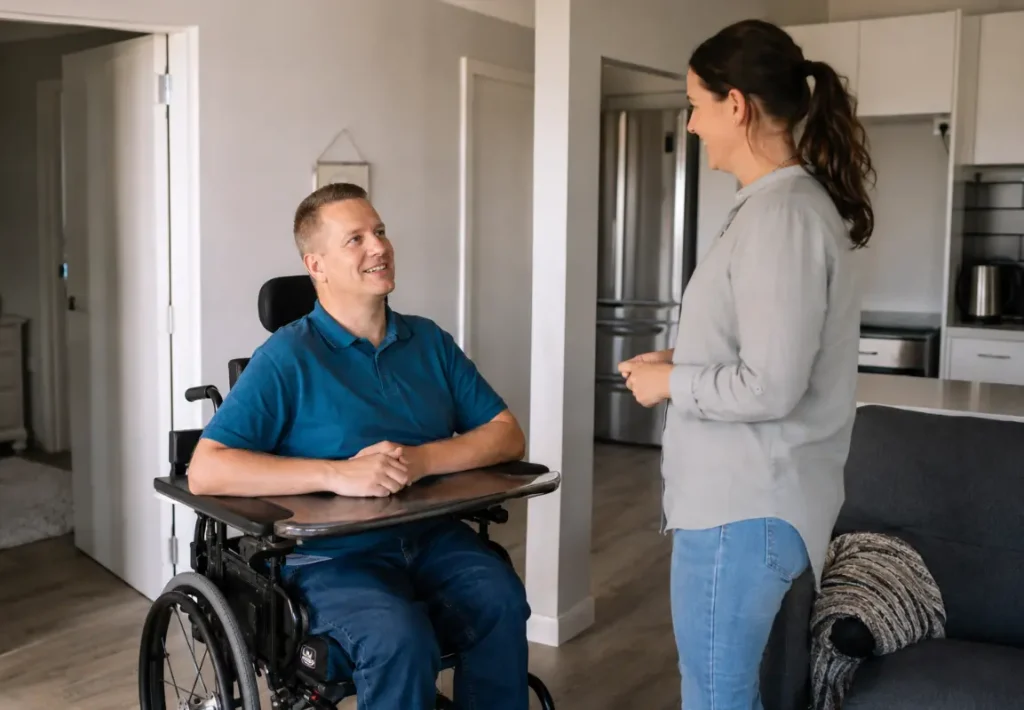
For example, a wheelchair user may require an accessible bathroom, adequate circulation space and reinforced ceilings for a hoist. Another participant may live safely in a conventional home with targeted modifications. The evidence should explain why a specialised dwelling is necessary for that person.
What Are Very High Support Needs?
Very high support needs may involve significant person-to-person assistance, immediate access to support or risks that cannot be managed effectively in ordinary housing.
The NDIA may examine the frequency, intensity and type of assistance required. Relevant factors can include overnight support, emergency response needs, complex personal care, safety risks and whether family or other informal support is sustainable.
Needing support throughout the day does not necessarily establish SDA eligibility. The request must show why the physical design of the home matters.
A participant may need round-the-clock assistance but receive it safely in a standard property. Another may require structural features so workers can provide transfers, personal care or emergency assistance safely.
SDA and SIL Are Different Supports
A common misunderstanding is that SIL approval automatically leads to SDA approval. The two supports have different purposes and are assessed separately.
SIL funds assistance or supervision with everyday activities at home. SDA funds the specialised dwelling. A participant may receive SIL in an ordinary rental, social housing or a family home. Some participants receive both because they need a specially designed property and regular daily support.
Our guide to the difference between SIL and SDA explains how housing and support funding can work together.
The NDIA may also consider whether home modifications, assistive technology, Individualised Living Options or another accessible property could meet the person’s needs. SDA is generally considered when other reasonable options are insufficient.
What Evidence May Support an SDA Request?
Strong evidence connects the participant’s functional limitations to clearly identified housing features. A diagnosis letter alone may not provide enough detail.
Supporting material may include an occupational therapy functional assessment, specialist housing assessment, allied health reports, a behaviour support plan, information about daily and overnight assistance, risk assessments, evidence of unsuitable previous housing and details about informal supports.
Reports should describe what the participant can and cannot do safely in the current environment. They should explain why particular SDA features are required and how those features could improve independence, reduce risk or allow supports to be delivered more effectively.
The participant’s goals, preferred living arrangement and location should also be documented.
Participants, families and support coordinators can use Brightside Healthcare’s SIL and SDA accommodation referral form to provide relevant information and begin discussing available options.
Common Misunderstandings About SDA Eligibility
A significant disability automatically qualifies someone for SDA. Eligibility depends on functional impact, support needs and the requirement for specialised housing.
Anyone who needs 24-hour support qualifies. The participant must show why the dwelling itself requires specialised design features.
SIL and SDA funding are the same. SIL pays for support delivered in the home; SDA pays for the eligible dwelling.
Finding an SDA property guarantees funding. The NDIA must approve suitable SDA funding in the participant’s plan.
SDA pays every housing expense. Participants generally remain responsible for rent contributions and ordinary living costs.
What Happens After SDA Funding Is Approved?
An SDA decision may identify an appropriate design category, building type and other funding details. The next step is to find a suitable enrolled dwelling that matches the participant’s approved needs.
Participants should consider accessibility, privacy, location, compatibility with other residents and daily-support arrangements. A written SDA service agreement should also be reviewed before moving.
Brightside Healthcare lists SDA housing vacancies in Sydney and Western Sydney, including homes designed for different accessibility and support requirements.
Discuss Your SDA Housing Options With Brightside Healthcare
At Brightside Healthcare, we help NDIS participants, families and support coordinators explore accommodation options and understand the practical next steps in the housing process.
Whether you are searching for SDA housing in Sydney, comparing local vacancies or looking for an SDA provider in Western Sydney, our team can discuss your needs and available properties.
Brightside Healthcare cannot approve or guarantee SDA funding. Eligibility and funding decisions are made by the NDIA based on each participant’s circumstances and supporting evidence. Contact our team to discuss your accommodation needs or complete an online referral.



More Stories
How Teladoc is Revolutionizing Mental Health Services
How Emergency Psychiatric Services Provide a Lifeline
How a Child Behavioral Therapist Supports Our Children